







Choosing Zippers, Elastics, Drawcords & Hardware
The details of sportswear often hold more value than meets the eye. Trims like zippers, elastics, drawcords, and hardware determine how well a garment performs, how long it lasts, and how it feels during movement. Sourcing these trims from a thoughtful supplier, such as Ninghow, can make a measurable difference for brands aiming to deliver consistent quality and peak user satisfaction. Learn more about Ninghow Custom Sportswear.
Types of Zippers: Coil vs Molded
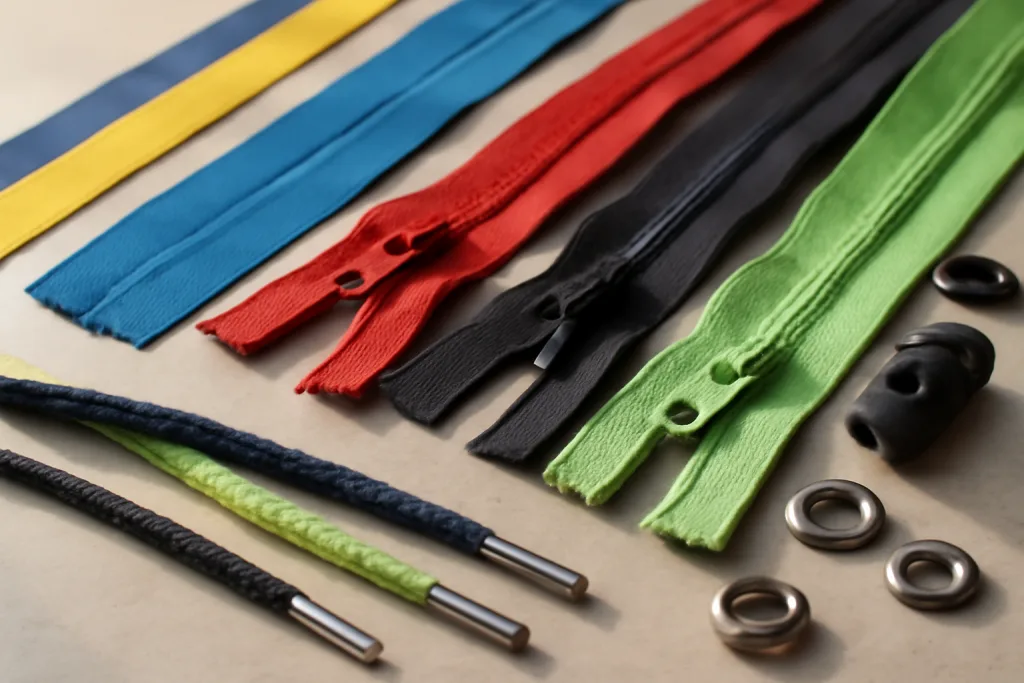
Zippers are frequently used in jackets, hoodies, and sports pants. There are two main types: coil and molded. Coil zippers have interlocking polyamide or polyester coils that give them flexibility and a smooth action. They are lighter and fit into curved seams, making them ideal for slim-fit or technical garments. Molded zippers, on the other hand, use polyacetal or metal teeth. These are sturdy, hold up to repeated stress, and offer a chunkier look. Molded zips are a common choice for heavy-duty sportswear, outerwear, or accessories that need extra reinforcement.
Pros and Cons Table: Coil vs Molded Zippers
| Type | Strength | Flexibility | Salt/Corrosion Resistance | Best Use |
|---|---|---|---|---|
| Coil | Medium | High | Excellent | Activewear, lightweight jackets |
| Molded | High | Moderate | Good* | Outerwear, bags, rugged sports uniforms |
*Molded zippers can be specified with anti-corrosive coatings to resist salt spray, important for marine or coastal sports.
Matching Zipper Types with Garment Application
- Coil zippers suit stretch fabrics, curved seams, and light layering shells.
- Molded zippers are best for windbreakers, technical uniforms, and any piece subject to substantial wear.
Auto-Lock, Non-Lock & Reverse Zipper Styles
How a zipper behaves while in motion is shaped by its locking style. Auto-lock zippers have a spring-loaded slider that stays in place when not being pulled. These prevent accidental openings, making them great for sports jackets and gear bags. Non-lock sliders move freely and are less secure, but work for decorative applications or when quick access is most important. Reverse coil zippers hide the teeth behind the fabric, creating a sleek look and minimizing abrasion against skin or gear — ideal for race vests and close-fit tops.
Choosing the Right Slider & Tape
- Choose auto-lock sliders where security is vital. They help avoid wardrobe malfunctions in the field.
- Prefer reverse coil zippers for a modern, minimal appearance and added comfort.
- Consider contrasting zipper tapes to highlight brand colors or add visual interest to team uniforms.
Waistband Elastics: Performance, Recovery & Consistency
Waistband elastics keep shorts, pants, and track bottoms secure during activity. The width, composition, and tension affect comfort and fit. Most sportswear suppliers offer elastics in polyester, nylon, or cotton blends. For consistent stretch and longevity, look for elastics that recover fully after repeated stretching. Bulk orders from Ninghow, for example, meet detailed spec requirements: width tolerance (±1mm), gram weight (typically 45–70 gsm for waistbands), and shrinkage standards (≤3% after washing per ASTM D1683).
Key Elastic Features for Sportswear
- Stitching — Bartack at ends prevents unraveling and ensures durability under stress.
- Finish — Soft-touch brushed or peach finishes reduce skin irritation.
- Performance — Look for options that retain at least 80% original length after 50 cycles of stretch/recovery.
Drawcords: Materials, Tips & Endings That Matter
Drawcords adjust fit and add style to hoods, waists, and cuffs. The material—cotton, polyester, nylon, or blends—determines handfeel and durability. For sportswear, polyester drawcords resist sweat and moisture; cotton offers comfort but absorbs water. The finishing on the cord ends (known as aglets) matters both functionally and stylistically. Metal tips bring weight and polish; plastic or heat-sealed ends keep costs and weight down but may degrade faster with repeated machine washing.
Expert Choices for Drawcords
- Specify double-core braided drawcords for higher breaking strength in training gear.
- Choose custom Pantone-dyed cords for strong brand alignment and crisp contrast.
- Opt for embroidered or branded cord ends for premium programs and promotional apparel.
Hardware: Cord Ends, Eyelets, Toggles & Stoppers
Small hardware pieces take on big roles in sportswear. Eyelets (metal or plastic rings for cord exits), toggles, cord locks, and stoppers have a direct impact on user experience and durability. Superior eyelet plating (nickel, zinc, or brass) should resist corrosion and meet at least 48-hour salt spray test standards (ASTM B117). For marine environments or coastal sports, specify marine-grade stainless steel or quality plastics designed to withstand high humidity and salt.
Selecting Hardware for Tough Environments
- Anti-rust finishes are vital for gear worn near water or during outdoor sports.
- Braid-friendly toggles save time during assembly and reduce cord pull-out failures.
- Low-profile cord stoppers minimize bulk for streamlined silhouettes on polo shirts and lightweight jackets.
Sourcing Sportswear Trims: Supplier Best Practices
Reliable suppliers do more than deliver trims; they collaborate on design, function, and compliance. Ninghow, for example, offers precise lab dip approvals for custom colors, batch consistency checks, and supports standards like OEKO-TEX STANDARD 100 for safe contact finishes. Brands should expect MOQ transparency, sample feedback rounds, and technical advice throughout the order process. The right sourcing partner helps avoid costly mismatches, such as trims that warp, break, or change shade after laundering.
How the Sourcing Process Works
- Submit tech packs or reference samples for trim matching and spec confirmation.
- Approve strike-offs, shade bands, and top-of-production samples.
- Request documentation for corrosion resistance, hypoallergenic finishes, and fabric compatibility.
- Review QA/QC reports: dimensional accuracy, AQL pass rate, salt spray or wash-test results.
Sportswear Trims Supplier
Choosing the right sportswear trims supplier bridges the gap between design and finished product. Not all suppliers can deliver consistency in fit, finish, and color across repeat orders. Experienced teams pay attention to lab-approved bulk colors, raw material batch tracking, and post-production testing. At Ninghow, you can source zippers, elastics, drawcords, hardware, and all integral trims for sportswear, athleisure, promo gear, and uniforms, backed by robust support and reliable lead times. From tech pack review and sample development to bulk orders, the process is designed for B2B efficiency and apparel craftsmanship.
Supplier Checklist for Trims Purchasing
- Do they offer lab dip and shade band controls for color matching?
- Can they supply test results for salt spray, corrosion, and wash stability?
- Is MOQ flexible for your development or bulk needs?
- Do they provide end-to-end service—from sourcing to export packaging?
Testing & Compliance: Why It Matters
Performance sportswear is subject to strict testing and compliance protocols. Fasteners and trims should withstand stretching, exposure to sweat, regular washes, and environmental factors such as salt air. Compliance metrics include:
- Salt Spray and Corrosion Testing: According to ASTM B117, hardware must retain function and appearance after 48–96 hours exposure.
- Dimensional Stability: Trims should maintain size after repeated laundering (AATCC 150).
- Oeko-Tex Certification: Ensures restricted substances and allergen-safe finishes (STANDARD 100).
Sourcing partners like Ninghow provide the documentation necessary to verify claims and uphold your brand standards during audits and market launches.
Applications in Sportswear & Beyond
Quality trims are crucial across diverse sportswear segments. In golf polos, coil zippers and subtle elastics are chosen for comfort and fit. Training hoodies require colorfast drawcords and durable zips that won’t jam or corrode. Track pants and shorts need waistband elastics rated for repeated stretching. For promotional events, branded hardware and custom cord ends offer a chance to express brand identity at scale. Whether outfitting teams, sponsoring events, or launching lifestyle lines, trims shape first impressions and lasting wearability.
- Team uniforms—focus on fit-for-purpose zippers and robust elastics.
- Athleisure lines—prioritize design/tactile finishes on drawcords and stoppers.
- Promotional apparel—highlight color-matched trims and branded hardware.
Trims Selection: Impact on Cost, Lead Time & Brand Quality
Trim choices influence every stage of the apparel supply chain. Custom zippers or branded hardware add value but may extend lead times (typically 10–18 days for production and finishing). Bulk ordering translates to lower per-piece costs, while selecting trims with proven wash and corrosion test results helps minimize returns and boost customer trust. Upfront investment in reliable sportswear trims suppliers pays off in consistent bulk deliveries and a finished product that stands up to both everyday use and demanding conditions.
Expert Takeaway: “In sportswear manufacturing, trims account for up to 15% of material costs but drive 80% of user satisfaction and reliability.”
Maximize Value & Performance with Thoughtful Trim Sourcing
Working with a knowledgeable trims partner—like Ninghow—lets apparel brands strike a balance between function, appearance, and cost. Every zipper, elastic, cord, and piece of hardware adds up to a garment that feels better, lasts longer, and achieves your brand vision.
Frequently Asked Questions
Which zipper type is best for lightweight sportswear?
Coil zippers are best for lightweight sportswear, offering flexibility, a slim profile, and high salt-corrosion resistance suitable for repeated washing.
Are waistband elastics affected by repeated laundering?
Quality elastics retain elasticity after multiple washes if they meet shrinkage and recovery specs, which reliable suppliers confirm through standardized testing.
How can cord ends improve sportswear garments?
Cord ends prevent fraying, make drawcords easier to use, and add style points. Metal or custom-branded ends offer improved durability and a premium feel.
What hardware is corrosion resistant for coastal sports?
Marine-grade stainless steel or plastics with anti-rust finishing ensure hardware resists corrosion in humid or salty environments, passing ASTM B117 tests.
How do suppliers guarantee color consistency for trims?
Suppliers use lab dips, strike-offs, and bulk shade band controls to match and maintain color consistency, preventing batch-to-batch variation.
Can all trim types be certified to OEKO-TEX standards?
Yes, trims such as elastics, cords, and hardware can be made to meet OEKO-TEX STANDARD 100, ensuring safety against harmful substances and allergens.