
Understanding Decoration Methods for Stretch Fabrics
Choosing the right decoration method for stretch fabrics can define the look, feel, and performance of activewear. As brands seek high-quality and lasting results, weighing embroidery, heat transfer, and screen print becomes crucial. Stretch fabrics like spandex blends and performance knits present unique challenges: the wrong technique can ruin garment flexibility, degrade rebound, or cause cracking after washing. Knowing the materials and methods helps brands create apparel that looks good and stands up to repeated wear and washes. Learn more about Ninghow Custom Sportswear.
Embroidery vs Heat Transfer vs Screen Print on Stretch Fabrics
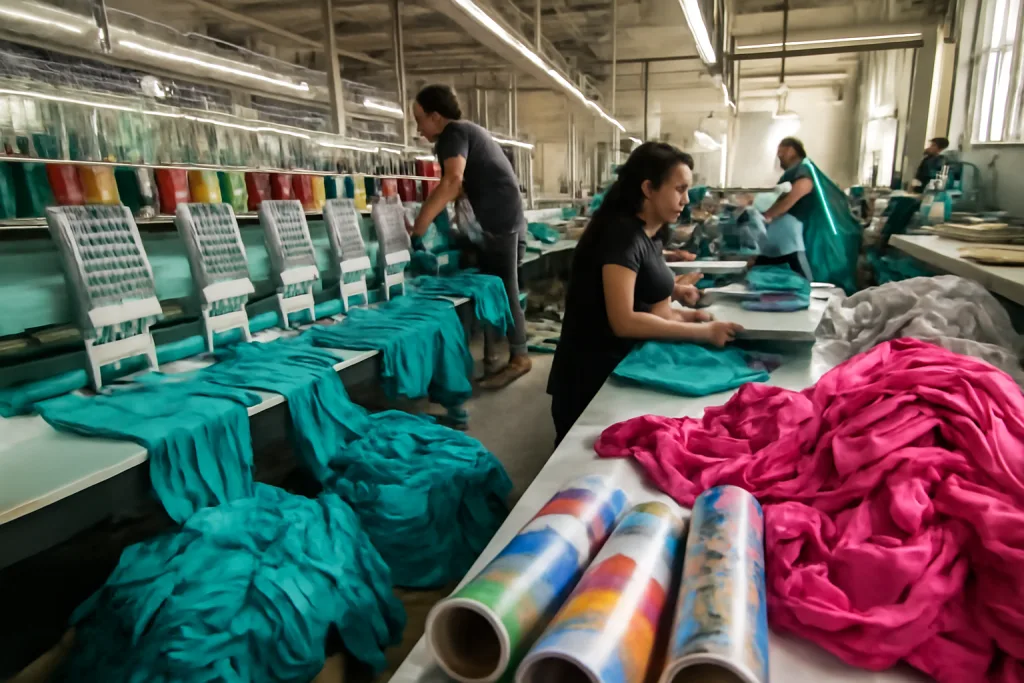
Stretch fabrics are popular in activewear for their ability to move with the body. But decorating them takes more than basic knowledge of traditional methods. Let’s explore embroidery, heat transfer, and screen print—focusing on their performance on elastic textiles.
| Decoration Method | Hand-Feel & Breathability | Rebound & Durability | Wash Test Result | Typical Cost Index | Best Placement Areas |
|---|---|---|---|---|---|
| Embroidery | Raised, dense; less breathable | May restrict stretch; excellent durability | No color loss; puckering possible | $$$ | Chest, sleeves, hats |
| Heat Transfer | Flexible, thin; preserves fabric feel | Excellent stretch if done right | Softens over time, color stays bright | $$ | Side panels, backs, leggings |
| Screen Print | Matte or slick; can impact breathability | Cracking possible; less stretch-friendly | Print may crack or peel with strain | $ | Large chest, back, less-stretch zones |
Materials Behind Stretch Apparel
Most stretch garments use elastane (spandex, Lycra), blended with polyester, modal, or combed cotton. Jersey knit, interlock, and French terry are common, ranging from 160 to 280 gsm. Ninghow, a trusted OEM/ODM clothing manufacturer, crafts activewear leveraging these constructions for athletic, lifestyle, and promotional needs. Fit consistency and fabric quality are core to their process.
Embroidery on Stretch Fabrics
Embroidery brings a raised, premium finish. It involves sewing thread into the fabric using computerized machines guided by a digitized design. However, embroidery can challenge the integrity of stretch fabrics. Tight stitching restricts fabric movement and may cause puckering when the garment flexes.
Pros
- Excellent color vibrancy and texture
- Long-lasting—threads do not wash out
- Gives a high-end look suitable for logos and emblems
Cons
- Reduces fabric stretch and may cause discomfort on tight apparel
- Heavy stitching impairs breathability
- Risk of puckering, especially after repeated washes
- Not great for large or detailed areas
Technical Considerations
To minimize issues, experts use lighter embroidery densities, ballpoint needles to avoid cutting elastic fibers, and backing stabilizers appropriate for stretch. Designers avoid dense fills or large blocks to maintain hand-feel. ISO 105-C06 wash testing ensures colorfastness. Proper seam strength prevents thread breakage.
Best Use Cases in Activewear
Embroidery suits chest logos, sleeve badges, or limited placement on less-stretch zones—think polos, sweatshirts, or team jackets. For yoga pants or high-flex shorts, it’s less friendly.
Heat Transfer on Stretch Fabrics
Heat transfer applies a design to the fabric using heat, pressure, and specialized film or ink. Modern films for stretch—like polyurethane (PU) or elastane-based vinyl—offer remarkable flexibility. Some labs blend anti-crack additives for added durability.
Pros
- Keeps the soft, flexible feel of stretch fabric
- Supports intricate, multi-color graphics; photo-quality possible
- Withstands repeated wash cycles without significant cracking
- Lightweight and nearly seamless after application
Cons
- Requires precise application to prevent lifting or peeling
- Incorrect transfer or overheating can damage stretch fiber
- Less durable on high-abrasion areas
- May show edge lift on heavy stretch zones after many wears
Workflows and Quality Control
Top factories, including Ninghow, test heat transfers using AATCC 135 (wash stability) and check print elasticity. Production lines use digital tech packs and mark placement with auto-cutters for repeatability. PU transfers (like Siser or Stahls) offer stretch without cracking for up to 50+ washes, passing ISO colorfastness standards.
Where It Works Best
Ideal for side panels of leggings, flexible areas of sports bras, or soft-touch logos on shorts. Many teamwear and athleisure brands use heat transfer for names, numbers, or brand graphics.
Screen Print on Stretch Fabrics
Screen printing pushes ink through a mesh screen onto fabric. Inks include water-based, plastisol, or discharge types, each responding differently to stretch. While cost-effective at scale, screen print faces unique challenges on high-stretch blends.
Pros
- Economical for large graphics or bulk runs
- Versatile ink/finish options (glossy, matte, metallic)
- Customizable hand-feel via ink type and print thickness
Cons
- Standard inks may crack with heavy stretch
- Can stiffen the fabric, reduce breathability
- Requires specialty inks or additives for durability on stretch
- Possible color fade or print peel after washes
Manufacturing Expertise
Pro teams use stretch-optimized plastisol or hybrid water-based inks with added plasticizers. In-house labs conduct vertical stretch, colorfastness, and abrasion tests against AATCC 61 and ISO 105-X12. Ink drying (curing) must be carefully calibrated to prevent surface cracks or peeling.
Best Uses in Activewear
Screen prints work well on T-shirts, lightweight team jerseys, or fashion sweats where moderate stretch is acceptable. Large prints placed on the chest or back avoid high-tension zones.
Hand-Feel, Breathability & Rebound: What Matters Most?
Each method changes how a stretch garment feels, how well air passes through, and how the fabric recovers after stretching. Below are key effects:
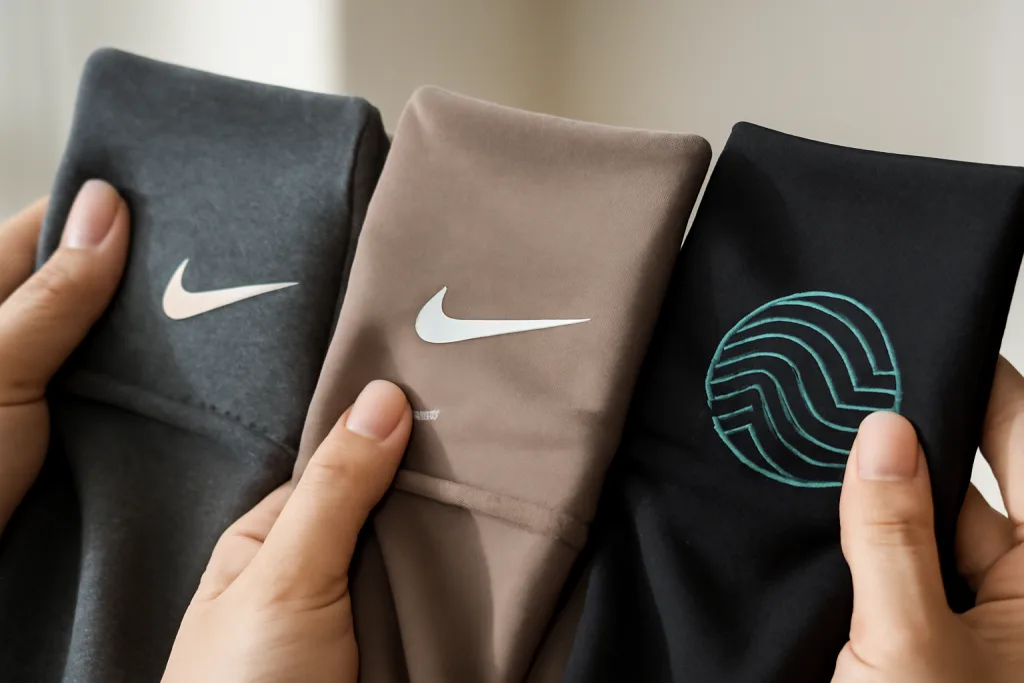
- Embroidery: Raised feel, minimal airflow where stitched; restricts stretch significantly around decoration.
- Heat Transfer: Mimics fabric feel, maintains breathability if applied thinly; stretches and rebounds with garment when high-quality PU film is used.
- Screen Print: Forms a thin film; hand-feel can be soft with water-based inks or slightly plasticky with plastisol. Standard prints reduce flexibility—a major factor on fitted performance wear.
Expert Tip: On performance clothing, the simpler and lighter the decoration, the better for long-term comfort and garment life.
Wash Test Insights & Color Stability
Tests such as AATCC 61 (launderometer) and ISO 105-C06 verify how decorations survive repeated washing. Factories run 5–50 wash cycles, evaluating for cracking, edge lift, puckering, and shade change:
- Embroidery: Threads resist wash-out, but fabric can pucker if stabilizer fails or stitching is too dense. Faded outlines may occur with low-quality thread.
- Heat Transfer: PU-based transfers can outlast screen print, though edge lift may start after 30–40 cycles if improper application. Modern films with stretch additive remain flexible for 50+ washes.
- Screen Print: Prints with stretch additives see minimal cracking after 20–30 washes; standard prints may degrade faster.
Branded suppliers like Ninghow document bulk color testing and submit shade bands for approval before mass production. This prevents costly shade mismatches by the time decorated apparel hits retail or team rosters.
Cost Comparison: Embroidery, Heat Transfer, Screen Print
Decoration choice affects both production cost and minimum order quantities (MOQs). Factories prepare cost matrices based on area, color count, piece count, and placement complexity:
- Embroidery: Highest price per garment due to thread, setup, and machine time. Complex logos with many stitches increase costs quickly. MOQ tends to be low (sometimes 100+).
- Heat Transfer: Mid-range cost. Simple logos and names are affordable for small or large runs. Photorealistic or multi-part transfers raise cost per placement.
- Screen Print: Most affordable at volume. Each color and screen costs extra, so best for single or two-color jobs at 300+ pieces. MOQ for custom screen setup can start at 100–300 pieces.
Bulk manufacturing with partners like Ninghow can lower per-unit costs, especially when consolidating decorations and garment production for large programs.
Placement Strategies for Activewear
Choosing smart placement means balancing style and garment performance. On high-stretch panels, lightweight heat transfers or small, sparse embroidery work best. Screen prints should avoid seams or intense flex zones.
General Tips:
- Keep decorations away from elbows, knees, and seat panels on tights or pants
- Limit embroidery to stable zones—upper chest or light rib bands
- For teamwear, use heat transfer for numbers/names and embroidery for badges or logos
- Avoid overlapping seams with any decoration method
Case Examples: Winning with the Right Method
Performance Yoga Leggings
A US yoga brand worked with Ninghow to develop recycled polyester-spandex leggings. By using super-stretch PU heat transfer for logos, they maintained garment flexibility and passed 50-wash durability tests, while embroidery was reserved for minimal waistband branding to avoid discomfort.
School Sports Team Sets
A UK school ordered 1,000 soccer kits in moisture-wicking polyester interlock. Screen print delivered vibrant, low-cost player numbers on jersey backs. By using elastomeric ink, uniforms stayed crack-free through the season’s washes. Embroidered school crests on the chest added a premium touch, as the placement avoided excessive stretch zones.
Corporate Activewear Giveaways
An Australian fitness chain requested quick-turnaround T-shirts and hoodies for a promotional campaign. Heat transfer allowed rapid execution for detailed event logos across diverse colorways. For hoodies, Ninghow recommended screen print for the back, while chest badges were embroidered for a professional finish.
Frequently Asked Questions
What is the best decoration method for stretch activewear?
Heat transfer is usually best for stretch activewear due to its flexibility and soft hand-feel. Modern films stretch and move with elastic fabrics, making them the top choice for performance.
Can embroidery ruin the stretch in sports garments?
Yes, heavy embroidery can stiffen or restrict stretch in sports clothing, causing discomfort and puckering. For stretch areas, use lightweight embroidery or alternative methods.
How many washes can screen prints on stretch fabrics last?
With proper ink and application, screen prints with stretch additives can last up to 30 washes before visible cracking. Standard screen prints may begin to degrade sooner on elastic fabrics.
Do heat transfers peel off after repeated stretching?
High-quality PU-based heat transfers can last over 40–50 wash/wear cycles without peeling if correctly applied. Low-quality films or poor application can lead to edge lifting.
Are there decoration methods better suited for large logos?
Screen printing is the most cost-effective option for large logos on areas with less stretch, like sweatshirt backs or team jerseys, while heat transfer works for moderate-sized graphics on flexible zones.
How do factories ensure color consistency for decorated apparel?
Factories run lab dips, strike-offs, and bulk color tests, using Pantone matching and batch control to keep shades uniform throughout mass production.