





Flatlock vs Overlock vs Coverstitch: Seam Choices for Activewear
Making top-tier activewear comes down to the right seam choices. Flatlock seams, overlock stitches, and coverstitch finishes all play unique roles in the performance and feel of sports clothing. For brands focused on quality—like Ninghow, a trusted OEM/ODM manufacturer—the stitch selection impacts not just comfort and durability but also cost, lead time, and how your gear stands out in the market.
Understanding Stitch Types in Activewear
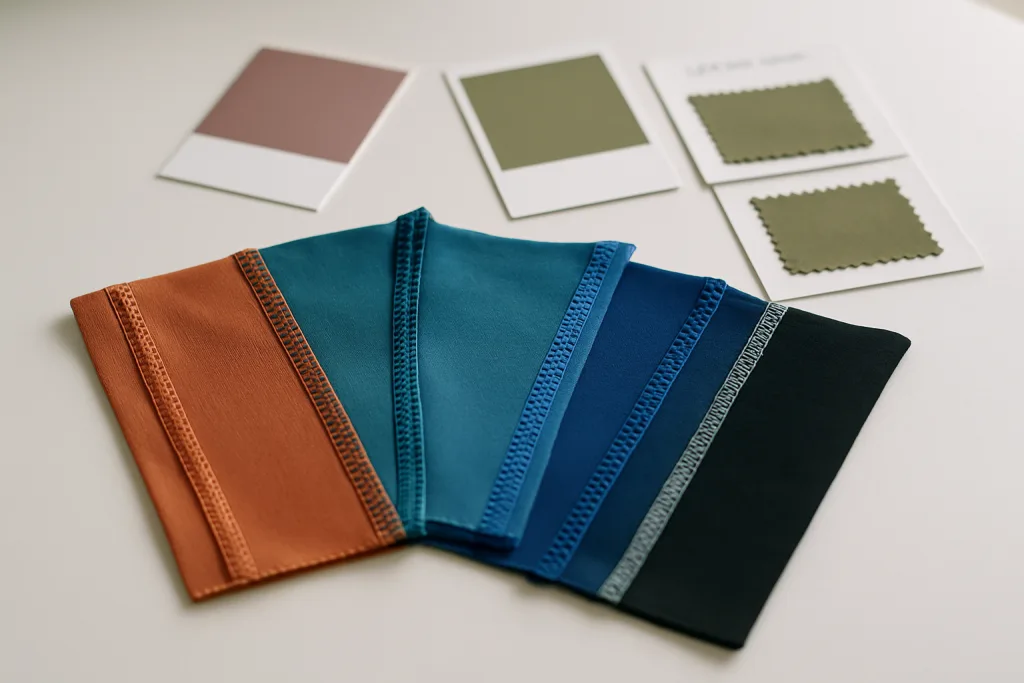
Sewing isn’t just about joining fabrics. Different stitch types create very different results. Their strengths depend on thread, seam construction, and how each seam handles movement and stress.
Flatlock Stitch
A flatlock seam lies almost level with the fabric surface. Both edges are butted together and sewn so the stitches pass through both layers, flattening out to prevent any bulky ridge. You often see these on training leggings, running tops, or cycling jerseys.
Why Flatlock Stands Out
- Comfort: No raised ridge, so it’s gentle against the skin—even during high-impact sports.
- Stretch: Adapts with body movement, supporting flexible knits like elastane blends (e.g., 90% polyester, 10% spandex).
- Look: Visible thread detailing creates a sporty, technical effect; color-contrast threads can accent design lines.
Overlock Stitch
Also called ‘serged’ seams, overlock stitches wrap thread around the raw fabric edge. These are workhorses for joining panels in T-shirts (single jersey, pique, or interlock knits) and help fabrics resist fraying.
Overlock Highlights
- Speed: Overlockers are among the fastest machines, ideal for scaling production.
- Strength: 4-thread and 5-thread overlock constructions hold up well for most day-to-day athletic wear.
- Cost-Efficient: Simple setup and fast throughput support large production runs; typically lower seam cost than flatlock.
Coverstitch
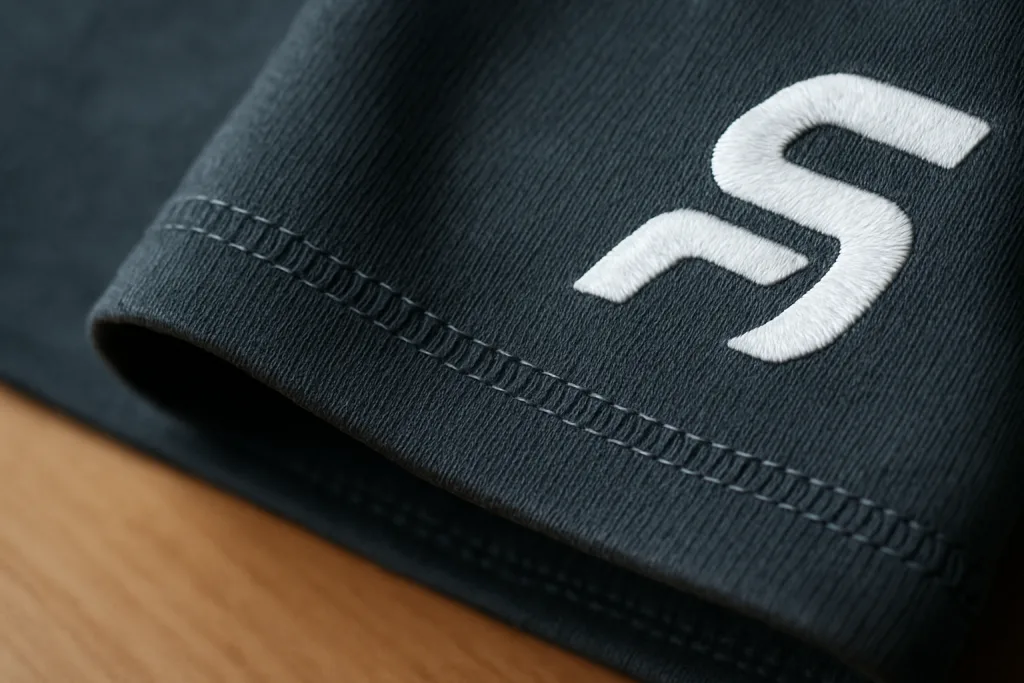
Coverstitch machines place two or more top threads across the garment’s outside, while an under-thread zigzags below. This creates a flexible, professional hem. Coverstitch is vital for cuffs, waistbands, and finishing the bottom edges of athletic tops and shorts.
Coverstitch Features
- Appearance: Clean, double-stitched rows with smooth stretch.
- Recovery: Cuffs and hems maintain shape and elasticity; ideal for elastane-rich fabrics.
- Security: Seals raw edges inside, minimizing fray and giving a neat look even after repeated washes.
Flatlock Seams in Activewear: Deep Dive
Flatlock seams are a signature for premium activewear. Their unique construction lessens skin rubbing, which matters for athletes spending hours in motion. Many brands trust flatlock for leggings, compression tops, and gear designed for sustained, intense use.
Construction Process
Modern flatlock machines, like Juki and Yamato, use multiple needles and loopers. They join two fabric edges without overlap, feeding the panels precisely. Stitch per inch (SPI) is tightly controlled—usually around 12–16 SPI for soft knits—to get a secure but flexible finish. High-quality recycled polyester (rPET) and elastane blends (at 180–260 gsm) respond well to flatlock, keeping seams flat even across color-blocked designs.
Comfort and Handfeel
Since the seam sits flush with the fabric, chafing is minimal. No extra bulk means better comfort for skin-contact garments. Lab tests (ASTM D1683 for seam strength) confirm flatlocks hold up, and repeated wash cycles don’t cause puckering. Flatlock can support anti-odor finishes, such as silver-ion antimicrobial treatments, without breaking down when laundered under AATCC 61 protocols.
Decorative Uses
Ninghow often applies flatlock for contrast color detailing. This boosts brand identity while keeping performance top-notch. Flatlock lines can accent muscle groups or align with ergonomic paneling for athletes and fitness fans.
Overlock vs Flatlock: Direct Comparison
Both seam types have a place in activewear, but their technical strengths and business impacts differ.
| Seam Type | Key Properties | Best Use | Cost Impact | Lead Time Factor |
|---|---|---|---|---|
| Flatlock | Flat, low-profile; no seam allowance; high stretch; reduced chafing | Performance leggings, compression tops, premium athleticwear | Higher unit cost (+20–45%) due to machine speed & thread use | Longer setup & sewing time (adds ~10–30% to lead) |
| Overlock | High seam strength; encases raw edge; moderate profile | Basic T-shirts, shorts, casual sportswear | Lower cost; ideal for bulk orders/MOQs | Fastest production (shortest lead) |
| Coverstitch | Stretch hem; professional finish; maintains garment shape | Product hems, sleeve edges, waistbands | Moderate cost; specialized machines needed | Efficient; no overlap with main seam sewing |
Cost and lead time often determine which seam a manufacturer recommends. Flatlock, while premium, can slow big orders and increase thread consumption. Overlock speeds bulk production, covering most essential seams in basic activewear lines. Coverstitch comes into play for finishes that need durability and stretch across hems or decorative details.
SPI and Thread Choices for Seam Integrity
SPI (stitch per inch) is a key measure in seam quality. For flatlock, 12–16 SPI keeps the seam tight without stiffening the garment. Overlock usually runs between 8–12 SPI to balance speed and strength. Coverstitch is set to 10–14 SPI, supporting stretch in cuffs and hems.
- Threads: Premium polyester filament, core-spun or textured thread, resists breakage in activewear.
- Needle Selection: Ballpoint needles for knits (ISO 4915) avoid fabric snags and preserve stitch integrity.
- Color-matching: Bulk color approval involves lab dips and strike-offs to match Pantone standards for thread and fabric.
Durability: Seam Testing and Compliance
Durability isn’t just claimed—it’s proven. Ninghow laboratories conduct ASTM D1683 seam strength tests, AATCC 135 wash stability, and dimensional change checks after repeated launderings. Seam selection impacts garment lasting power, wash resistance, and overall performance. Flatlock and coverstitch both excel on knit fabrics that stretch and recover. Overlock remains tough but may show puckering on lightweight mesh unless controlled for thread tension.
The best seams meet compliance benchmarks: OEKO-TEX STANDARD 100 for materials, BSCI or WRAP for labor practices, and CPSIA for children’s garment safety.
Decorative and Functional Finishes
Seams don’t just hold fabric—they affect style, print quality, and branding potential. Flatlock works perfectly with water-based or discharge screen prints, as ink won’t crack over the low-profile seam. Overlock seams pair best with embroidery and heat transfer decoration, ensuring the garment remains sturdy under stitch stress. Coverstitch adds performance to hems and sleeves, anchoring print or transfer without wrinkling and supporting stretch.
- Screen printing (plastisol or eco-friendly water-based) favors flat seams for clean layouts.
- Sublimation prints (on rPET) demand smooth joinery; flatlock wins here.
- High-density embroidery (including puff/3D) aligns with overlock for base stability.
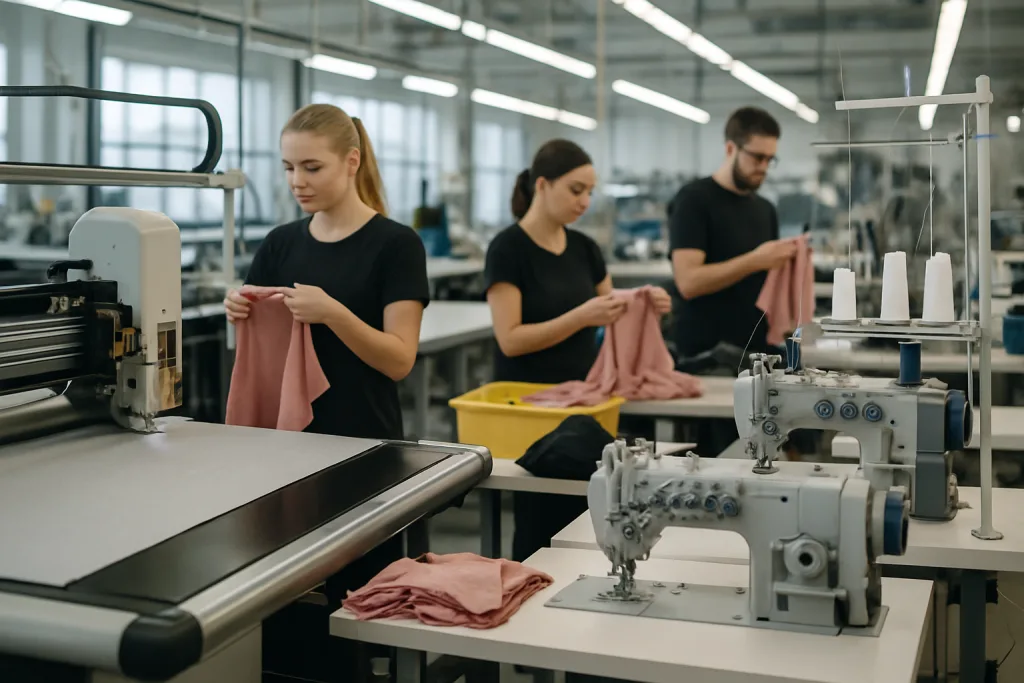
Sample Images from Ninghow Production Lines
Ninghow’s advanced sewing lines use both automated and manual machines. Key steps include:
- Fabric swatch testing and lab dip approval for color accuracy
- Automated cutting with precise seam notching and grainline control
- Inline QC checks for SPI, seam puckering, and thread tension
- Close inspection of finished hems for coverstitch and embroidery quality
The right seam choice is visible in every sample. Flatlock and coverstitch stand out on premium gear, while efficient overlock gets everyday basics shipped fast and cost-effectively.
Impact of Seam Selection on Cost and Lead Time
Choosing between flatlock, overlock, and coverstitch means balancing performance with business outcomes. Flatlock costs more due to slower stitching and increased thread use; expect unit prices +20% to +45% compared to overlock. That can add a week to lead time, especially for high-MOQ orders. Overlock optimizes cost and speed, supporting quick turnarounds for uniforms and events. Coverstitch adds a modest cost—worth it for premium finishes and professional hem durability.
MOQ (Minimum Order Quantity) considerations, marker efficiency during cutting, and auto-cutter use all shape overall project budget and timing.
Applications: Where Each Seam Shines
Sports and Fitness Apparel
- Flatlock: Compression shorts, running tights, yoga leggings (comfort, stretch)
- Overlock: Basic tees, shorts, team uniforms (strength, speed)
- Coverstitch: Bottom hems, sleeve cuffs on performance shirts (stretch recovery)
Promotional and Corporate Programs
- Fast overlock for promo shirts, event merch
- Flatlock detail for upmarket client gifts or athlete kits
- Coverstitch for high-quality branding finishes on lifestyle garments
Streetwear and Athleisure
- Contrast flatlock for ‘tech street’ looks
- Decorative coverstitch combining hem shape and color accents
Uniforms/Teamwear
- Durable overlock plus reinforced coverstitch on key stress points
Quality Control and Assurance in Seam Manufacturing
Consistent results require strict quality control. Ninghow employs inline and endline checks, detailed spec measurement tables, puckering and skew audits, and needle detection processes. Garments undergo shrinkage, colorfastness (AATCC 61), and pilling (ISO 12945) tests in certified labs. Every seam is inspected for stability and compliance—ensuring each order meets buyer specs and international standards.
Packing, Logistics, and Seam Choice Impacts
Seam selection can influence final packaging. Flatlock-heavy garments are folded to minimize bulk; polybag specs must prevent abrasion during shipping. Care labels (ISO 3758 symbols) specify wash protocols to maintain seam performance. Hangtags detail construction and yarn source, supporting sustainability claims where recycled or GOTS-certified cotton is used. Ninghow’s export packaging includes clear carton marking and ratio packs, easing logistics for B2B clients targeting on-time delivery and flawless presentation.
Decision Guide: Flatlock vs Overlock vs Coverstitch—What’s Best for Your Brand?
Expert Takeaway:
“Choose flatlock for premium comfort and style; overlock for speed and economy; coverstitch for critical hems and pro finishes. Match seam choice to your brand promise—and let a specialist like Ninghow support technical execution from sampling to delivery.”
- Weigh comfort, durability, and cost for each garment line.
- Consider target market: pros need flatlock, promos favor overlock, and athleisure buyers expect decorative coverstitch.
- Ask for lab and production samples—Ninghow offers full swatch sets for pre-bulk assessment.
Frequently Asked Questions
What is the main difference between flatlock and overlock seams in activewear?
Flatlock seams create a flat, skin-friendly join with no bulk, while overlock seams wrap the fabric edge for strength and speed, often resulting in a slight ridge.
Why are flatlock seams preferred for premium activewear garments?
Flatlock seams reduce chafing, move smoothly with the body, and add a visibly sporty design detail, making them popular for leggings and compression gear.
How does coverstitch improve hems and cuffs on sportswear?
Coverstitch provides stretch recovery and a professional finish to hems and cuffs, so garments keep shape and comfort through repeated wash and wear cycles.
Does seam type affect activewear lead time and unit cost?
Yes, flatlock seams take more time and thread, raising unit cost and lead time, while overlock and coverstitch are more efficient for bulk orders and standard decorations.
Which threads and SPI settings are best for activewear seams?
Polyester filament threads, ballpoint needles, and SPI settings of 12–16 for flatlock, 8–12 for overlock, and 10–14 for coverstitch optimize durability and comfort in performance fabrics.
How does Ninghow ensure seam quality and compliance?
Ninghow uses inline QC, lab testing (ASTM, AATCC), and certified processes like OEKO-TEX and WRAP to guarantee each seam meets quality and sustainability standards.